
Highlights
- An investor approached Voltaiq to evaluate the competitive landscape for silicon anodes and validate their investment thesis.
- Voltaiq advised the client that a comprehensive benchmarking of cutting-edge consumer electronic batteries would provide the required information to answer the investment question.
- Electric Goddess designed and performed a bespoke test plan, leveraging their expertise and lab facilities to accurately assess the size and breadth of the silicon anode battery landscape.
- Electric Goddess and Voltaiq gathered, normalized, and interpreted complex electrochemical data, transforming it into clear and concise investment intelligence.
- The work product was delivered as an interactive dashboard through the Voltaiq platform.
The Ask
- An investment manager made an early investment in a firm specializing in silicon anode batteries and needed to determine whether major OEMs had adopted silicon anodes for commercial devices.
- The firm needed answers to a deceptively simple question: Is the market actually adopting the technology we bet on?
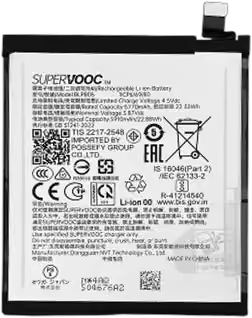
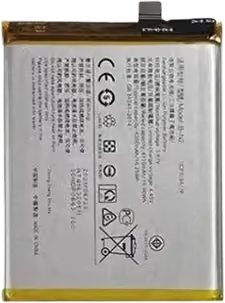
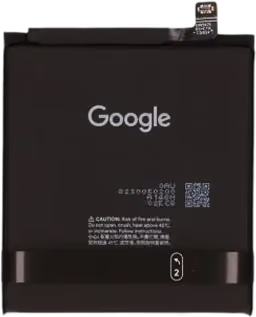

Our Approach
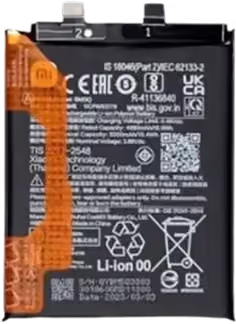
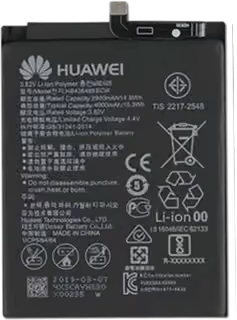
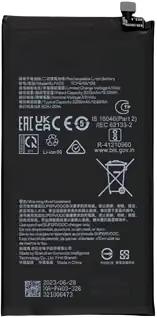
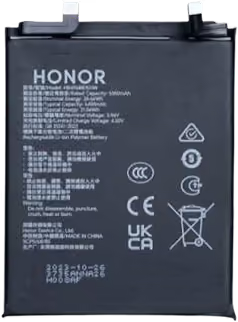
The selection spans two orders of magnitude in cell capacity. These devices are built to be as small as possible, and do not lend themselves easily to instrumentation and data logging.
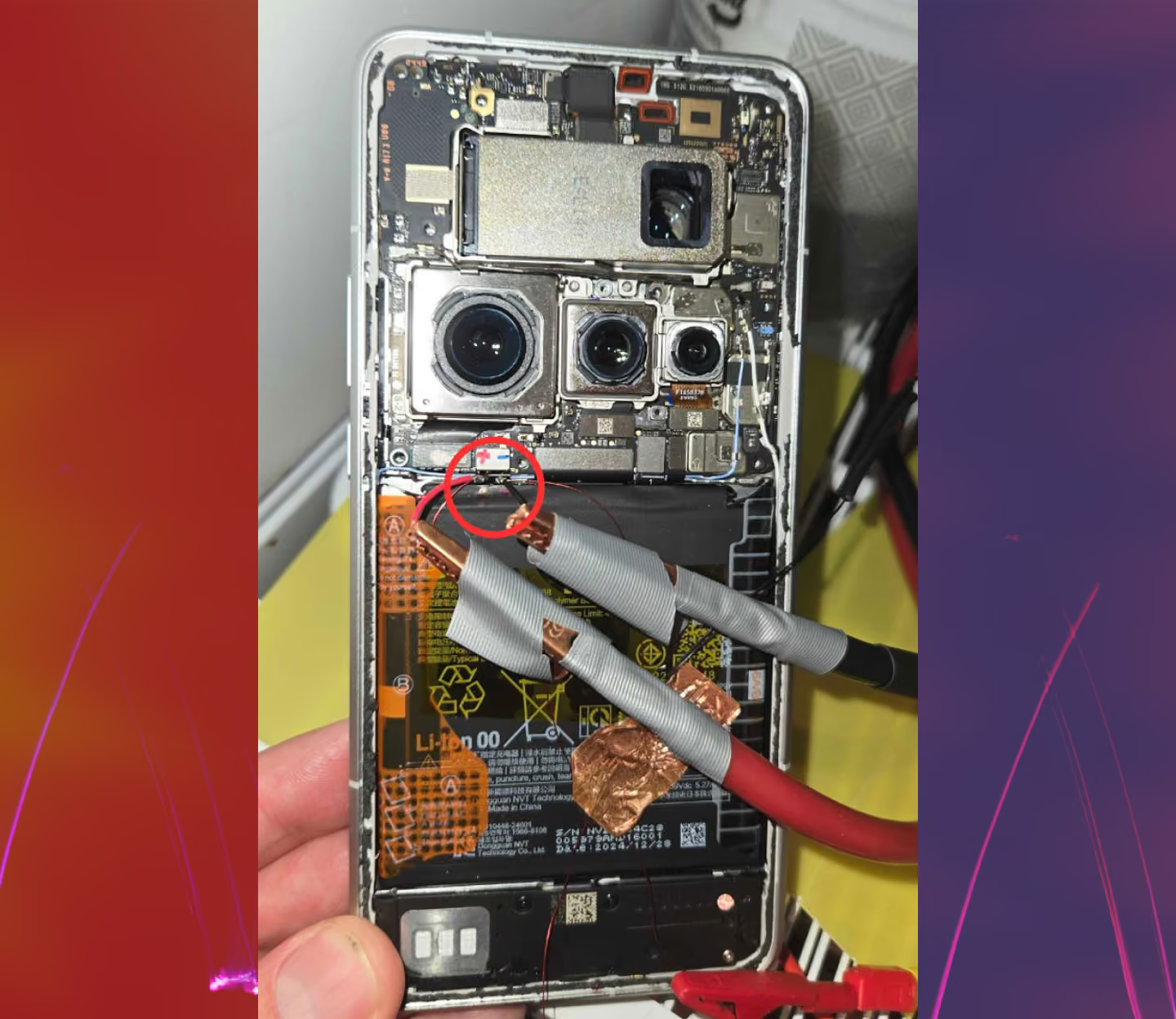
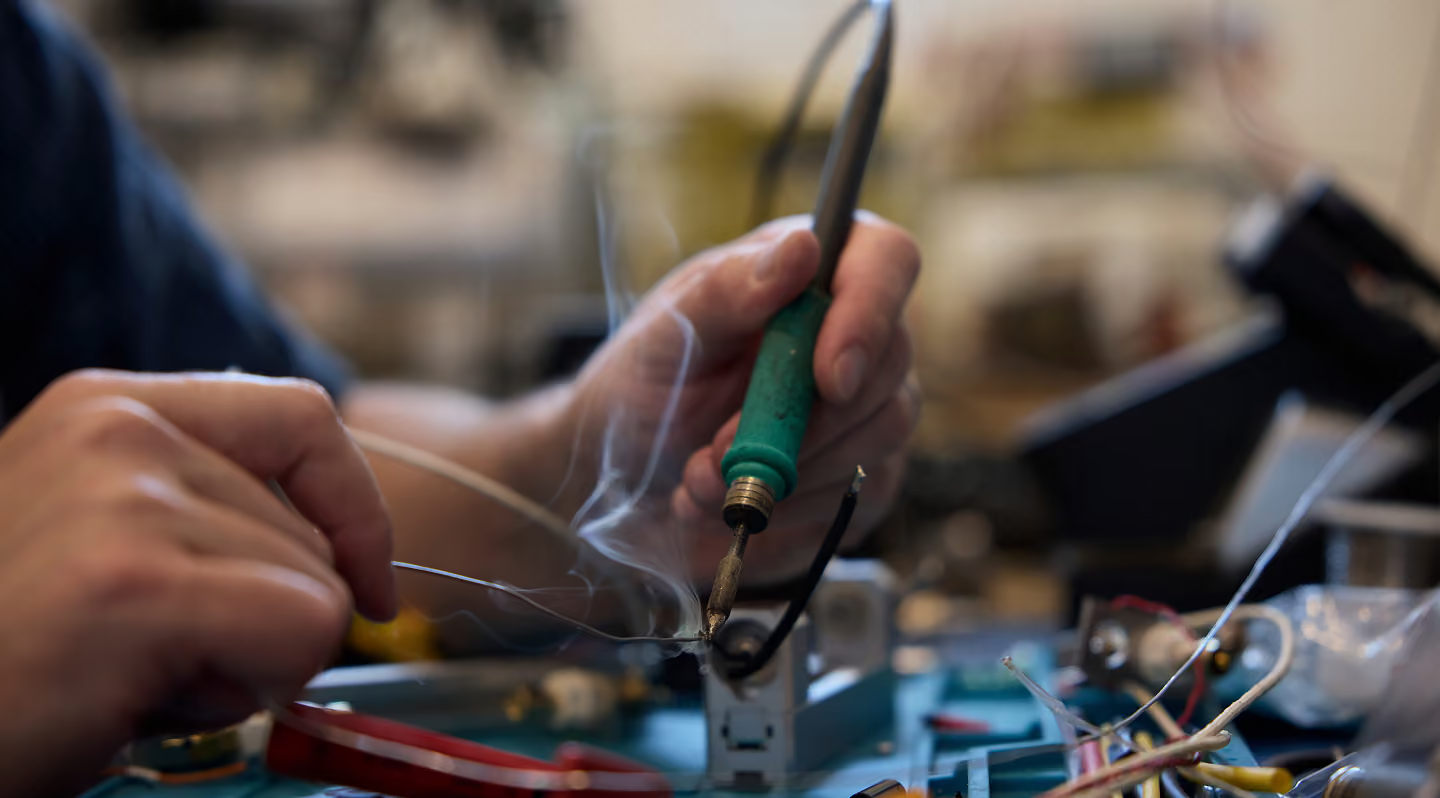
Data was initially captured with the device's battery as sold with a USB data logger and OEM chargers. After initial benchmarking, the battery-focused approach required delicate procedures to open each device and apply a micro-harness to instrument each battery cell in situ. This work was non-trivial. For example, the Huawei phone’s design did not permit access to the battery without damaging the entire phone. Electric Goddess had to carefully cut through the $2,000+ device to access the battery without damage. Once opened, each device needed to be instrumented with a custom set of test leads (some as small as 0.05 mm wire thickness) and individually tailored test rigs to produce comparable data across radically different form factors, including:
- Nominal charge/discharge voltage profiles at three temperatures
- Maximum charging rate determination (sequential increase to 75°C thermal limit)
- Cell capacity and energy at 5°C, 25°C, and 50°C
- Voltage limits (manufacturer-listed values, BMS, and post-charge OCV)
- Volumetric and gravimetric energy density (measured dimensions and mass)
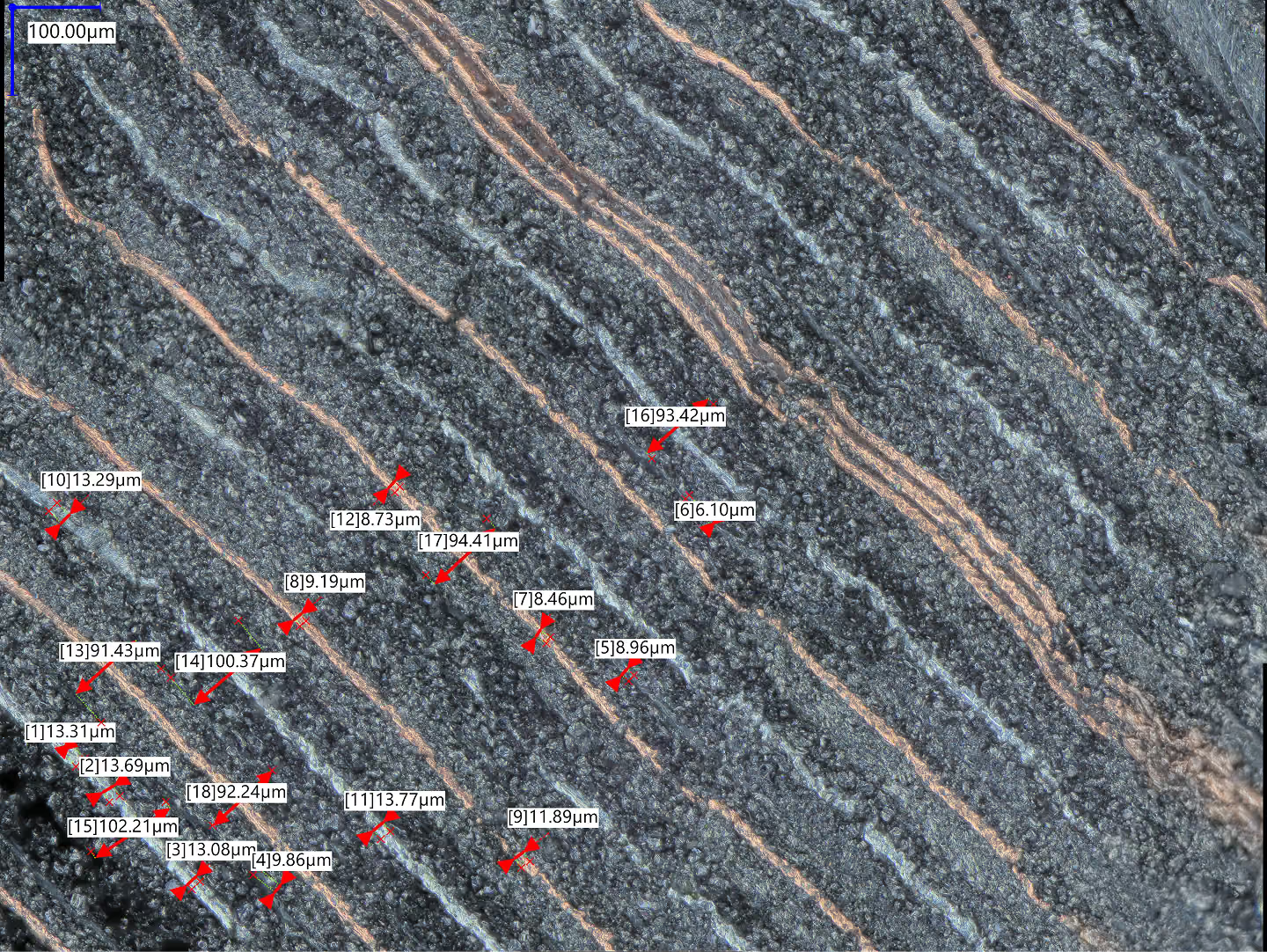
- Cathode composition analysis (elemental relative abundance and mass fraction)
- Anode composition analysis with emphasis on silicon content and Si/Carbon ratio
The complex instrumentation and comprehensive testing were completed by the Electric Goddess team, and the data and expert analysis were delivered by Voltaiq in time for the investment group to make key decisions. A sample of the consolidated test results are shown below.
| Device | Si/C ratio | Gravimetric energy density (Wh/kg) | Claimed peak charging power (W) | Measured peak charging power, 25°C (W) |
|---|---|---|---|---|
| Xiaomi 15 Ultra | 0.47 | 294 | 90 | 73.9 |
| Huawei Mate 70 Pro Plus | 0.41 | 328 | 100 | 76.6 |
| OPPO Find N5 Flip | 0.40 | 313 | 80 | 43.9 |
| Honor Magic Pro 7 | 0.35 | 330 | 100 | 65.9 |
| OPPO Find X8 Pro | 0.25 | 343 | 80 | 45.4 |
| Vivo X200 Pro | 0.20 | 329 | 90 | 36.7 |
| Google Pixel 9 Pro | 0.00 | 339 | 27 | 24.9 |
| Ray-Ban/Meta Glasses | 0.00 | 210 | No claim; charged through case | 1.51 |
Xiaomi 15 Ultra
Huawei Mate 70 Pro Plus
OPPO Find N5 Flip
Honor Magic Pro 7
OPPO Find X8 Pro
Vivo X200 Pro
Google Pixel 9 Pro
Ray-Ban/Meta Glasses
Key findings
1. Silicon anodes are here - but adoption varies widely
The headline finding for the investor:six of eight devices contained silicon in their anodes, with Si/C ratios ranging from 0.20 to 0.47. Only the Ray-Ban Meta Glasses and Google Pixel 9 Pro contained zero silicon.
This confirms the investor's thesis: major Chinese OEMs (Xiaomi, Huawei, OPPO, Vivo, and Honor) are all shipping silicon-containing anodes in their flagship devices. The Google Pixel 9 Pro's absence of silicon is equally telling. It suggests U.S. OEMs may be lagging in adoption, which has additional implications for the American silicon anode portfolio company.
2. Energy density leaders typically correlate with higher Si content, but not always
The devices with the highest volumetric energy densities also tended to incorporate silicon. The OPPO Find X8 Pro led at 853 Wh/L and 343 Wh/kg, followed closely by the Vivo X200 Pro at 851 Wh/L.
It is notable that the second-most energy-dense cell, the Google Pixel 9 Pro, did not contain any Silicon (Si) in the battery, unlike the non-American products tested, which used Si in the anode. Although Si is great for improving energy density, it typically comes with volatility tradeoffs, which must be mitigated by other components of the cell design.
All cells shared LCO cathode chemistry stabilized with aluminum, indicating the anode composition, specifically the silicon content, was the primary differentiator in cell design across these devices.
3. No device achieved its claimed peak charging power
Every device tested fell short of its manufacturer-claimed peak charging power. The Xiaomi 15 Ultra came closest, maintaining high peak power at both 25°C and 50°C (73.9W and 72.5W against a 90W claim). The gap was most pronounced at elevated temperatures, where BMS thermal management significantly throttled charging rates. The Honor Magic Pro 7 dropped from 65.9W at 25°C to just 10.4W at 50°C against a 100W claim.

The collaboration that brought it together
Voltaiq, founded in 2012, is the pioneer in enterprise battery analytics software and expert battery data analysis. The Voltaiq platform is trusted by industry-leading customers spanning transportation, consumer electronics, energy storage, and the full battery supply chain, who rely on Voltaiq to get battery products to market faster, ensure battery quality, accelerate manufacturing ramp-up, and optimize yield.
Electric Goddess, founded in 2019, is a specialized industry-trusted battery design consultancy and advanced test facility for applications across land, sea, air, and space. From Fortune 100 companies to cutting-edge startups, Electric Goddess accelerates research and development to support the deployment of new technologies and rugged battery products into the market.
Volumetric Energy Density vs. Silicon Anode Fraction
Gravimetric Energy Density vs. Silicon Anode Fraction
Key Technical Findings
- More silicon does not mean higher energy density. OPPO Find X8 Pro leads both metrics at just 6.1% Si, while Xiaomi's 11.4% delivers the worst result in the group.
- Google Pixel 9 Pro hits 338 Wh/kg with zero silicon, proving cathode engineering alone can match Si-containing cells.
- Vivo, Honor, Huawei, and OPPO Find N5 all cluster at 10% Si with near-identical energy densities, reflecting a shared supply chain and a known ceiling for Si expansion
Along with interpreting the key findings, when reviewing the results of maximum C-rate tests paired with the energy density data, we see that the Ray-Bans are outliers in both. Not only do the glasses have significantly lower energy density than any of the other consumer electronics, but it is capable of sustaining charging rates higher than any other cell without exceeding the thermal limit. This suggests that the cells in the glasses are power cells rather than energy cells, aiming to charge and discharge quickly instead of being built purely for high energy density. One possible difference between this power cell is the higher electrode porosity and lower electrode thicknesses to reduce charging resistances. This is a reasonable cell design choice since the Ray-Bans are not expected to last all day, but rather intermittent use with quick recharge after use, similar to wireless earphones.
Without a grasp of application-specific cell design, specifically regarding expected function, the technology benchmarking study would have miscategorized the wearable as "underperforming" compared to the phones.
Solving the technical due diligence gap
Battery technology investments can hinge on claims about next-generation materials: higher energy density, faster charging, longer cycle life.
Claims made in marketing materials and the performance of a shipping product are two very different things, even for major global manufacturers.
In energy technology, without independent validation, investors are left underwriting expectations. Performance is determined by measured empirical data.
We call this the technical due diligence gap in battery industry investing.
Electric Goddess and Voltaiq bridge the scientific and financial divide with their battery expertise, delivering an outsized advantage to client investment decisions.
Book a 30-minute introductory consultation with Electric Goddess.